Featured Essay
The First Sentence Is a Promise You Can't Walk Back
Every opening line is a contract with the reader. It tells them what kind of writer you are, what kind of story this will be, and whether or not you can be trusted. Most writers break that promise by the third paragraph. Here is how not to.
Recent Essays
Structure
Why the Three-Act Structure Is a Trap
The framework that every screenwriting manual swears by is also the reason most stories feel mechanical. There is a better model, and it has been hiding in novels since 1850.
Voice
Your Characters Talk Too Much
Dialogue is not conversation. Conversation is what people say. Dialogue is what they almost say, refuse to say, and say when they mean something else entirely.
Revision
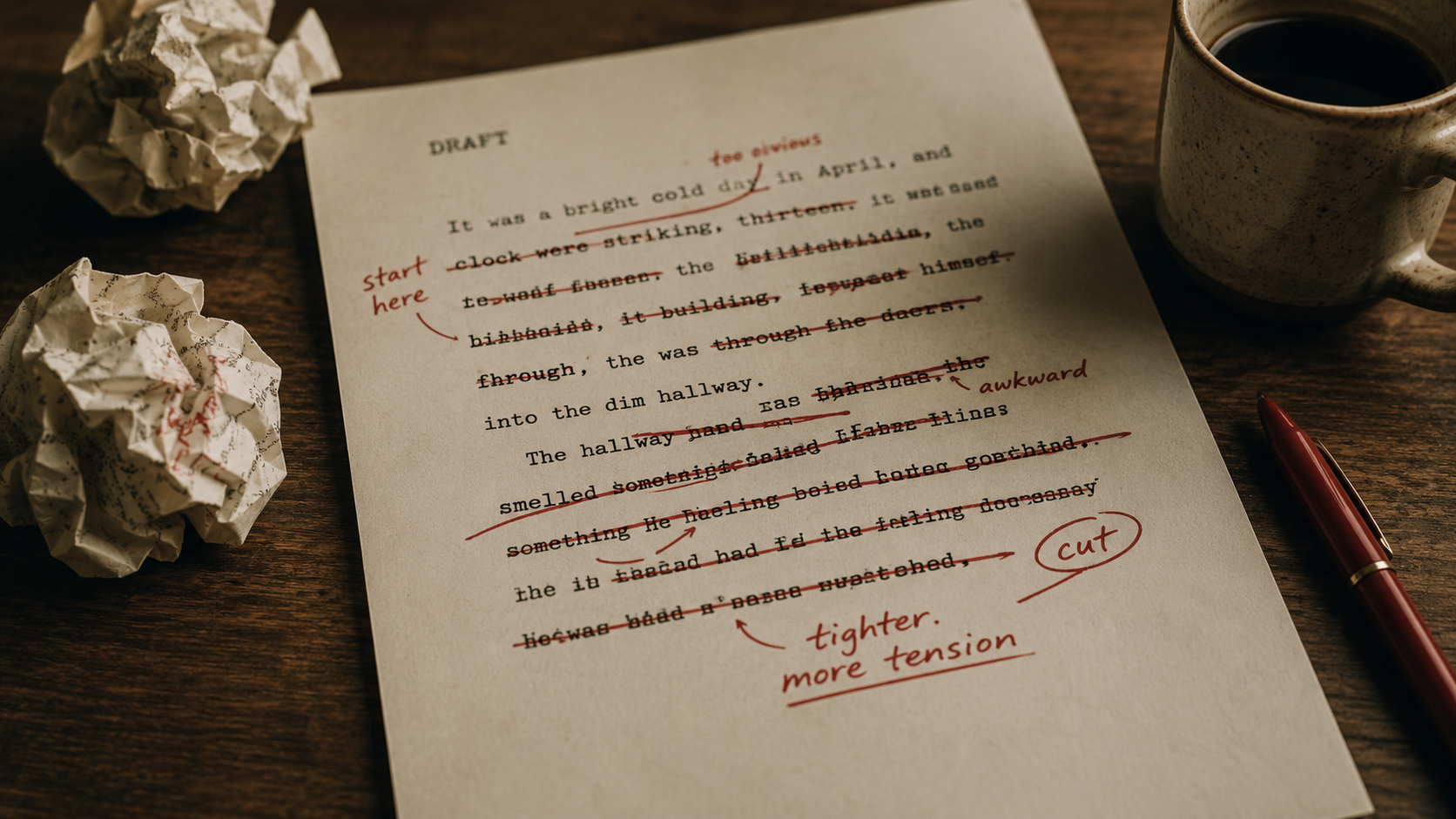
On Killing Your Darlings , and Being Right About It
Faulkner's famous advice is real, but it is also frequently misapplied. Not every sentence you love needs to die. Some of them just need to move.
More on Craft
Habit
Read Slowly to Write Fast
The writers who produce the most are almost always the ones who read the slowest. Speed-reading is an optimization for information consumption. It has nothing to do with learning how sentences work. This is why it will never make you better.
Beginnings
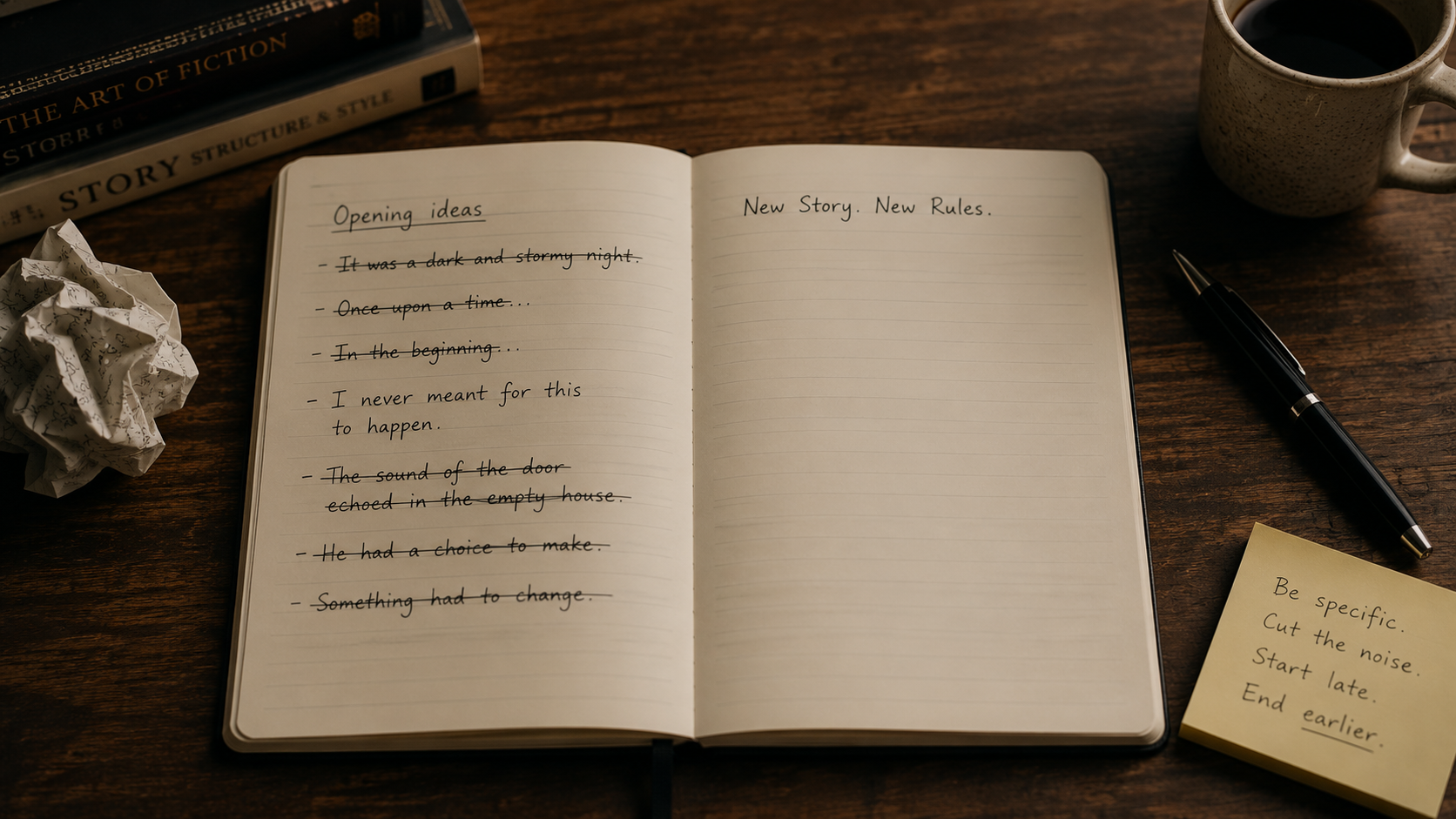
The Blank Page Is Not the Problem
Writer's block is almost never about not having ideas. It is about not having permission to write badly. The cure is not inspiration , it is lowering the standard of what counts as starting.
Sentence-Level
The Comma Is a Breathing Mark
Most punctuation errors are not grammatical errors. They are rhythmic ones. A comma in the wrong place does not confuse the reader , it makes them hear the wrong music.